
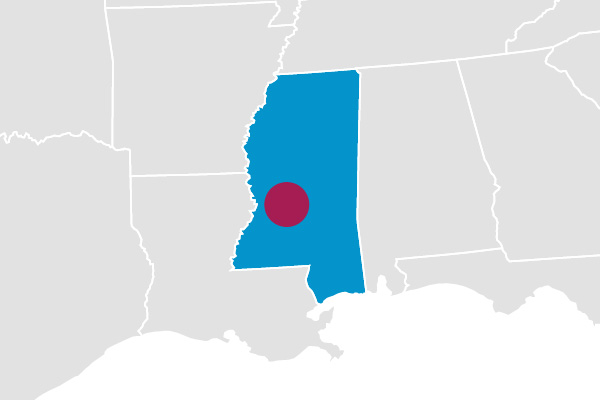
 Hinds County, Madison County, and Rankin County—the three counties that make up the Jackson, MS metropolitan statistical area (MSA)
The Jackson Heart Study (JHS) was a landmark, community-based research study designed to better understand why cardiovascular disease has disproportionately affected African Americans—and how it can be prevented. By following thousands of participants from the Jackson, Mississippi metropolitan area over time, JHS created a uniquely rich resource for discoveries that improve heart health for future generations.
JHS was established to investigate causes of cardiovascular disease in African Americans and to generate knowledge that could strengthen prevention and improve health outcomes.
Core goalsJHS was sponsored by the National Heart, Lung, and Blood Institute (NHLBI), with NIH partners, and was carried out through collaboration among three Jackson institutions: Jackson State University, University of Mississippi Medical Center, and Tougaloo College.
Participants were recruited from urban and rural areas of the Jackson, Mississippi metropolitan area (Hinds, Madison, and Rankin Counties). The cohort included 5,306 adult African-American participants enrolled through multiple recruitment pools, including community volunteers, random sampling, ARIC participants, and family members.
A large community-based cohort focused on African-American cardiovascular health.
Participants came from Hinds, Madison, and Rankin Counties in the Jackson, MS metropolitan statistical area (MSA).
Four major clinic exam cycles and a annual follow-up created long-term insight into heart health and aging.
Clinical measures plus lived-experience factors that can influence cardiovascular outcomes.
JHS created a rare and valuable resource for understanding cardiovascular risk and outcomes in African Americans, enabling ongoing discovery through responsible stewardship of data and participant contributions.
JHS enabled research into both conventional and emerging risk factors—supporting a deeper understanding of how biology, environment, and lived experience intersect in cardiovascular health.
Carefully maintained data and stored specimens supported investigator-led projects and collaboration through ancillary studies, within established review processes.
Community partnership was integral to study operations—supporting trust, engagement, recruitment, retention, and health education activities across study phases.
JHS strengthened research infrastructure and supported educational pathways that helped prepare future public health and research leaders.
JHS grew through a phased approach, beginning with planning and feasibility work and then progressing through multiple clinic examination cycles and ongoing follow-up.
TimelineProtocol development, training, and pilot testing informed full-scale study operations.
The first major clinic examination cycle established baseline measures for long-term follow-up.
A second clinic examination cycle expanded longitudinal understanding of cardiovascular risk.
A third clinic examination cycle extended follow-up across more than a decade.
JHS was maintained under joint stewardship of its partner institutions and the NHLBI. The study’s data and resources were used to encourage scientific progress while protecting participants and preserving the integrity of the study’s primary goals.
Ancillary studiesAncillary studies expanded the value of JHS by enabling additional investigator-led research using JHS data, samples, and participants—within established terms, conditions, and review processes.